Maximum virtual product: The new way to prototype software
The methodologies for developing large software systems have evolved to optimize for the unit economics of the moment. LLMs have changed the cost of creating a maximum virtual product for large software projects. As a result, we need to re-prioritize the prototyping phases of the software development lifecycle.
A maximum virtual product is “a hyperrealistic, exquisitely detailed model”1 used during the planning and prototyping phase of a project. The term was introduced in How Big Things Get Done. Whereas a minimum viable product is a great fit for small-scale or easy-to-reverse projects, they are not well-suited for large, hard-to-undo projects. In these cases, a maximum virtual product enables extensive simulation and experimentation before executing a plan.
Software is thought of as an easy-to-reverse work product. Which is true, until it isn’t. A piece of software is less fungible as soon as people rely on it.
Software can be both a prototype and the final result. The difference depends on context. The relative expense of writing code influences whether it is likely to be used as a prototype2. Up until recently, writing a high-fidelity software prototype was always an expensive endeavor. Back in the waterfall3 days, a program design was synonymous with a prototype. A program design, however, is a poor prototype because it fails to stress-test theory against practical realities. An interface mockup doesn’t address the ergonomics of how clients will use it. A program design doesn’t make the designer feel the pain of having to click 10 different places to perform an action.
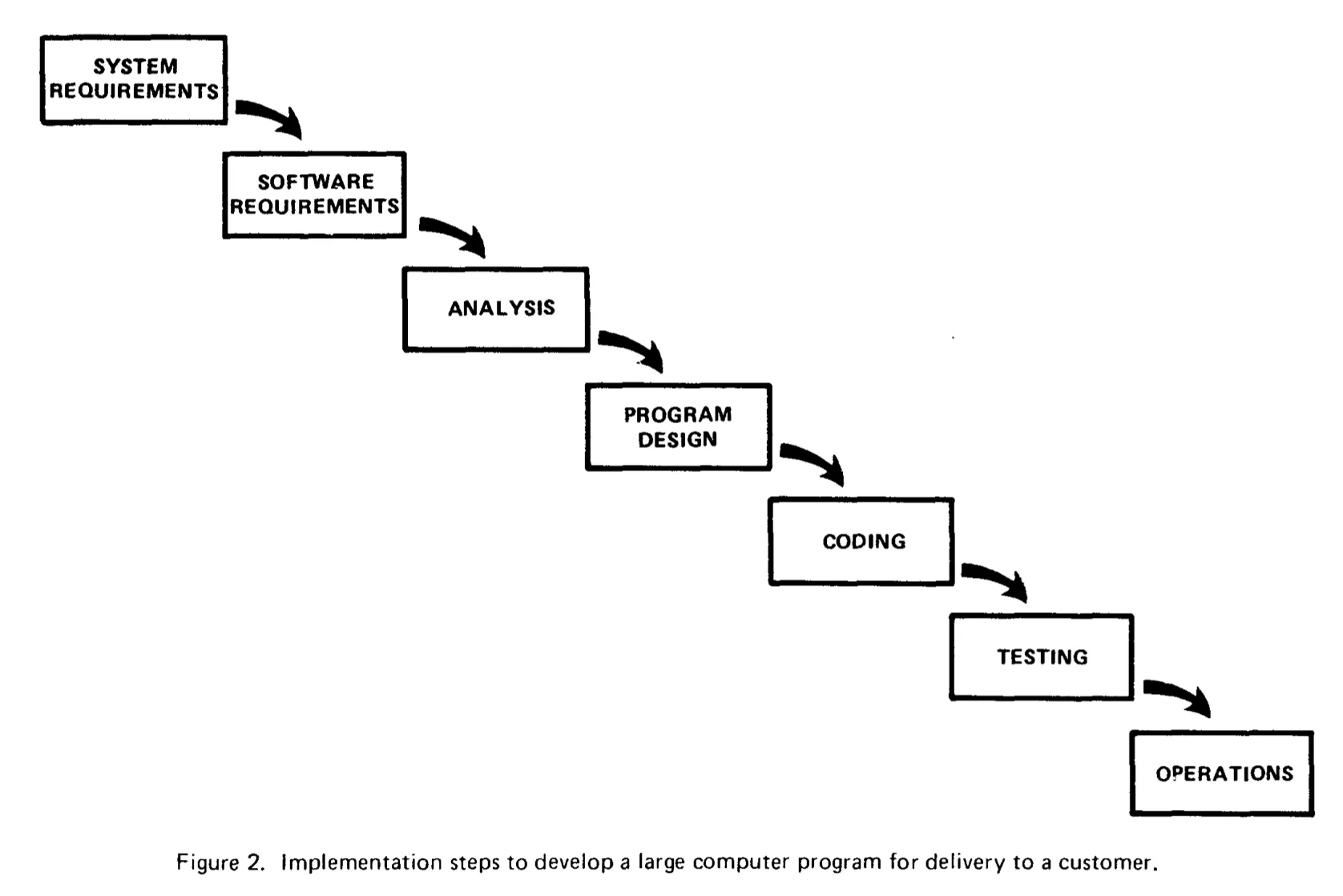
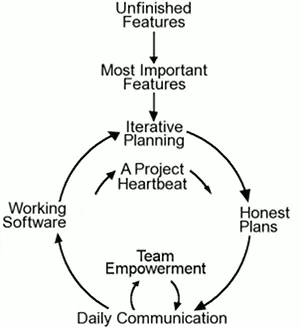
The agile manifesto and related agile methodologies, such as extreme programming4 and scrum, de-emphasize the program design phase by slicing a project’s scope into small functional increments. The result is increased coding velocity at the cost of deferring system-wide design decisions. Smaller, earlier, narrow-in-scope, naive decisions then have time to calcify. Now the project is at a point where system-wide changes are expensive. Thus, the premature functional slicing of a large project increases its own development cost. Said another way: the project feels fast at the start, and devolves into a slog. Naturally, teams end up with a water-scrum-fall hybrid process. Adopting an iterative approach after the big design decisions are made.
And then the LLMs came. AI coding agents have made writing code way cheaper — code quality notwithstanding. The limiting factor of LLM-based code production is a sufficiently detailed prompt. This means that “hyperrealistic, exquisitely detailed model[s]” of software are within reach of most teams! It is easy to create an arbitrary number of high-fidelity software prototypes.
Now the program design phase can start with a maximum virtual product (many versions of it), followed by hands-on testing, then by requirement refinement. Repeat until satisfied! The load-bearing decisions of a project do not have to follow a philosophical and bureaucratic process. Instead, they follow high-quality feedback from the team’s hands-on testing.
footnotes
-
How Big Things Get Done, Dan Gardner and Oxford professor Bent Flyvbjerg (ch. 4, “Pixar Planning,” p. 78) ↩